
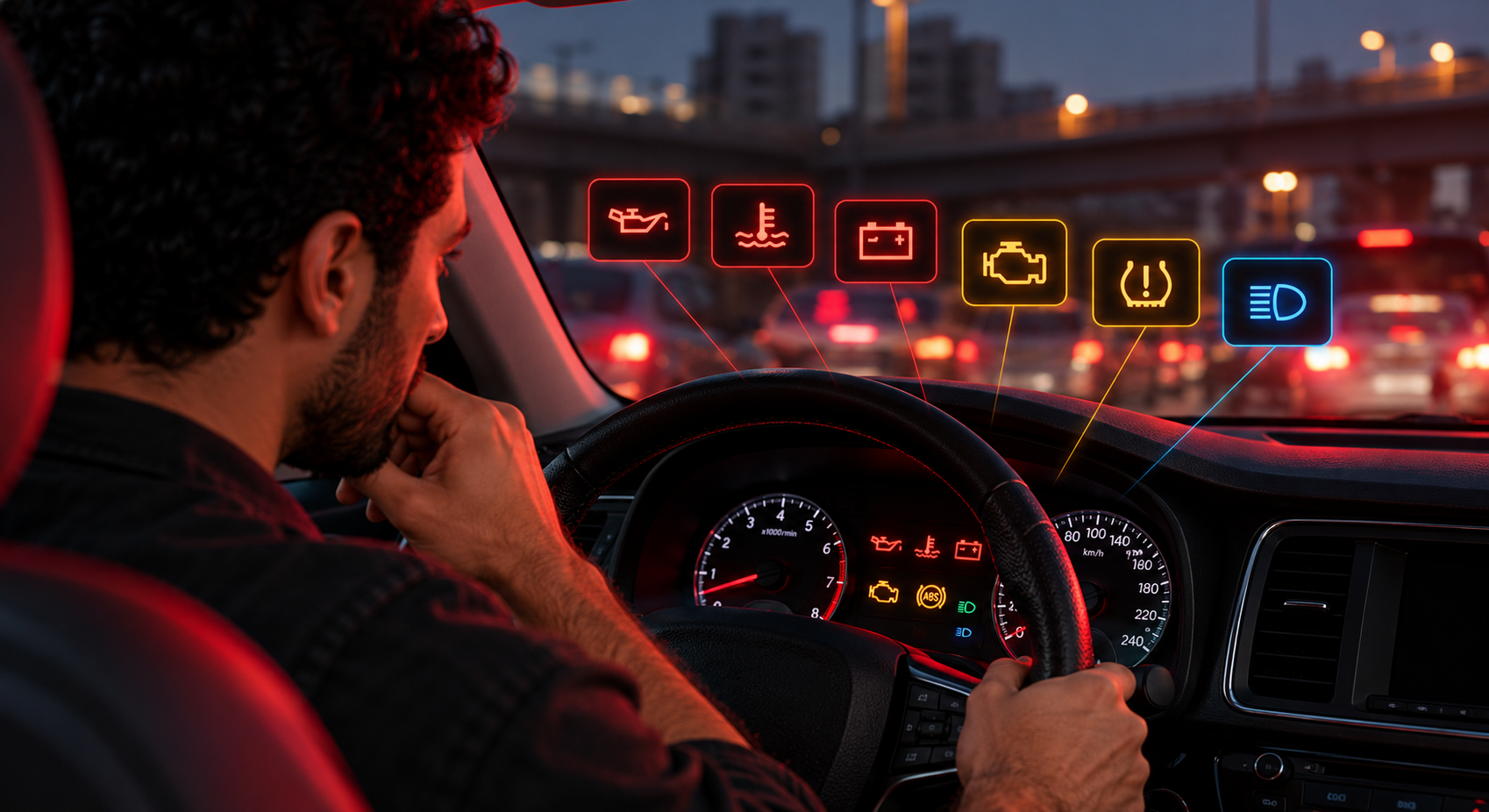
Learn what common dashboard warning lights mean, which signals require immediate action, and how to respond safely when a warning light comes on.
Have you ever noticed a warning light on your car's dashboard and wondered whether you could keep driving?
Dashboard lights may indicate a variety of problems, from low tire pressure to engine issues. If you understand what these lights mean, you can make safer decisions and avoid expensive repairs. Remember that warning light meanings and colors can differ from one vehicle to another, so refer to your owner's manual. Let’s explore what the most important warning light any driver could see is:
1. Red Warning Lights: Stop and Check
Red warning lights generally indicate a serious issue that may require immediate action. Common examples include:
- The oil pressure warning could mean the engine oil pressure is too low. Stop safely and switch off the engine.
- The engine temperature warning could mean the engine is overheating. Stop and let it cool down. Do not open a hot cooling system.
- Warning about the braking system: This could indicate a problem with the brake system or low brake fluid. If the warning remains on after you have released the parking brake, pull over safely and get professional assistance.
2. Yellow or Amber Lights: Investigate the Problem:
Amber dashboard lights often indicate a fault that needs attention. Examples include:
- The 'check engine' light may indicate several engine or emissions issues.
- The tire pressure warning could mean one or more tires are underinflated.
- Warning: This may indicate a fault with the anti-lock braking system.
With some amber warnings, you can drive carefully to a service center, but in other cases you need to act more immediately. Refer to your owner’s manual and obtain professional advice.
3. Green and Blue Lights: Usually Informational
Normally, green and blue dashboard lights indicate that a feature is on, such as the headlights or high beams. They generally don't mean there's a problem, but it's worth knowing what each symbol stands for.
4. What Should You Do When a Warning Appears?
First, stay calm and assess the situation. If the indicator suggests a serious problem, stop in a safe location. Do not continue driving if the car is overheating, if there is a brake problem, or if there is another dangerous issue—do not act on a dashboard symbol alone. A professional diagnosis can help to identify the real cause.
To understand the warning lights on the dashboard. It is important as part of proper car maintenance to know what the warning lights on the dashboard mean. When looking for replacement parts, make sure they fit your specific vehicle model and specifications before you buy them.
Check out ReadyCar to find car parts and accessories that help keep your vehicle in good condition.